


Your body may be asking for a break before your mind is ready to admit it.

Work, family duties, money worries, uncertainty, and nonstop phone alerts can keep your thoughts racing and your muscles tense. Finding inner calm does not mean ignoring hard feelings or staying peaceful all the time. It means creating enough space to notice what you feel and choose a thoughtful response.
Energy healing techniques offer different ways to create that pause. They may involve breathing, gentle movement, sound, touch, visualisation, focused awareness, or personal intention. People view these practices in different ways. Some connect them with spiritual beliefs, while others simply use them as quiet time to rest and reflect.
The following techniques are approachable, but each person may respond differently. Energy healing may support your personal wellbeing routine, but it should never replace medical care, mental health treatment, prescribed medication, or advice from a qualified professional.
Understand How Energy Healing Practices May Encourage Calm
Stress does not stay only in your thoughts. It can show up in your body in ways that are easy to overlook. You may notice:
- Shallow or faster breathing
- Tight shoulders, jaw, or stomach
- Restlessness or trouble sitting still
- Racing or repeated thoughts
- Difficulty focusing on simple tasks
Many energy healing techniques create a break from noise, screens, and daily demands. They direct your attention towards your breathing, body, or immediate surroundings. Repeated movements, steady sounds, gentle touch, and quiet reflection may help create the right conditions for relaxation. They can also bring your attention back to what is happening right now.
You do not have to clear your mind or push away every uncomfortable feeling. Inner calm is not an empty mind. It is the ability to notice a thought, feeling, or body sensation without letting it control your next action.
However, people can respond very differently to the same practice. A sound that comforts one person may distract another. Gentle touch may feel relaxing to some people but uncomfortable to others. It may take time to find an approach that suits you, and it is fine if a certain method does not help.
Scientific evidence also varies between different energy healing techniques. Ideas about invisible energy fields, blocked energy, and the transfer of energy have not all been medically proven. It is reasonable to stay curious while treating dramatic health claims with care.
Warmth, tingling, heaviness, tears, or deep relaxation may occur during a session. These feelings are personal experiences, not proof that an illness was detected or an energy blockage was cleared. If anxiety, low mood, poor sleep, pain, or other symptoms continue, worsen, or affect daily life, speak with a qualified healthcare professional.
Explore Energy Healing Techniques for the Mind and Body
You do not need to try every practice to find something that helps you slow down. The following energy healing techniques can be used separately or carefully combined. Begin with one that feels comfortable, keep the session short, and notice how your mind and body respond.
Use Breath, Grounding, and Body Awareness to Return to the Present
Gentle breathwork gives a busy mind something simple to follow. Sit comfortably and breathe in naturally through your nose. Let your exhale become slightly longer than your inhale, but do not force your lungs or hold your breath. Continue for a few minutes, stopping if you feel dizzy, short of breath, or in pain.
Grounding can also bring your attention back to your surroundings. It does not require bare feet on the earth, special objects, or spiritual beliefs. You can quietly notice:
- Your feet resting against the floor
- The chair supporting your body
- Colours and shapes around you
- Sounds nearby and farther away
- The temperature of the air against your skin
A body scan works in a similar way. Slowly move your attention from your head towards your feet and notice where you feel tightness. If it feels comfortable, soften your jaw, lower your shoulders, or unclench your hands. Do not use these sensations to diagnose an energy problem. Ongoing or unexplained discomfort should be checked by a qualified healthcare professional.

Encourage Gentle Flow Through Reiki, Qigong, and Visualisation
Reiki is a Japanese practice in which a practitioner places their hands lightly on or just above a person’s clothed body. Sessions usually take place in a quiet setting. You might feel warmth, tingling, sleepiness, emotion, or nothing unusual at all.
Scientists have not confirmed Reiki’s proposed transfer of energy. However, some people find that the calm setting helps them relax. Choose a practitioner who explains what will happen, asks permission before touching you, respects your boundaries, and never promises to cure an illness.
Qigong is a traditional Chinese practice combining slow movement, comfortable breathing, posture, and focused attention. It may suit people who find it difficult to sit still. A simple movement involves slowly lifting your arms as you breathe in, then lowering them as you breathe out. Stay within a comfortable range. Seek suitable guidance if you have problems involving pain, mobility, balance, or another health condition.
Visualisation involves creating a calming picture in your mind. You might picture warm light moving gently through your body or waves slowly becoming still. Add details such as colour, sound, texture, and temperature. If you find it hard to form mental pictures, repeat a soothing phrase or steady sound instead. Visualised light is not proof that disease, toxins, or harmful energy are leaving your body.
Use Sound and Reflective Writing to Create Emotional Space
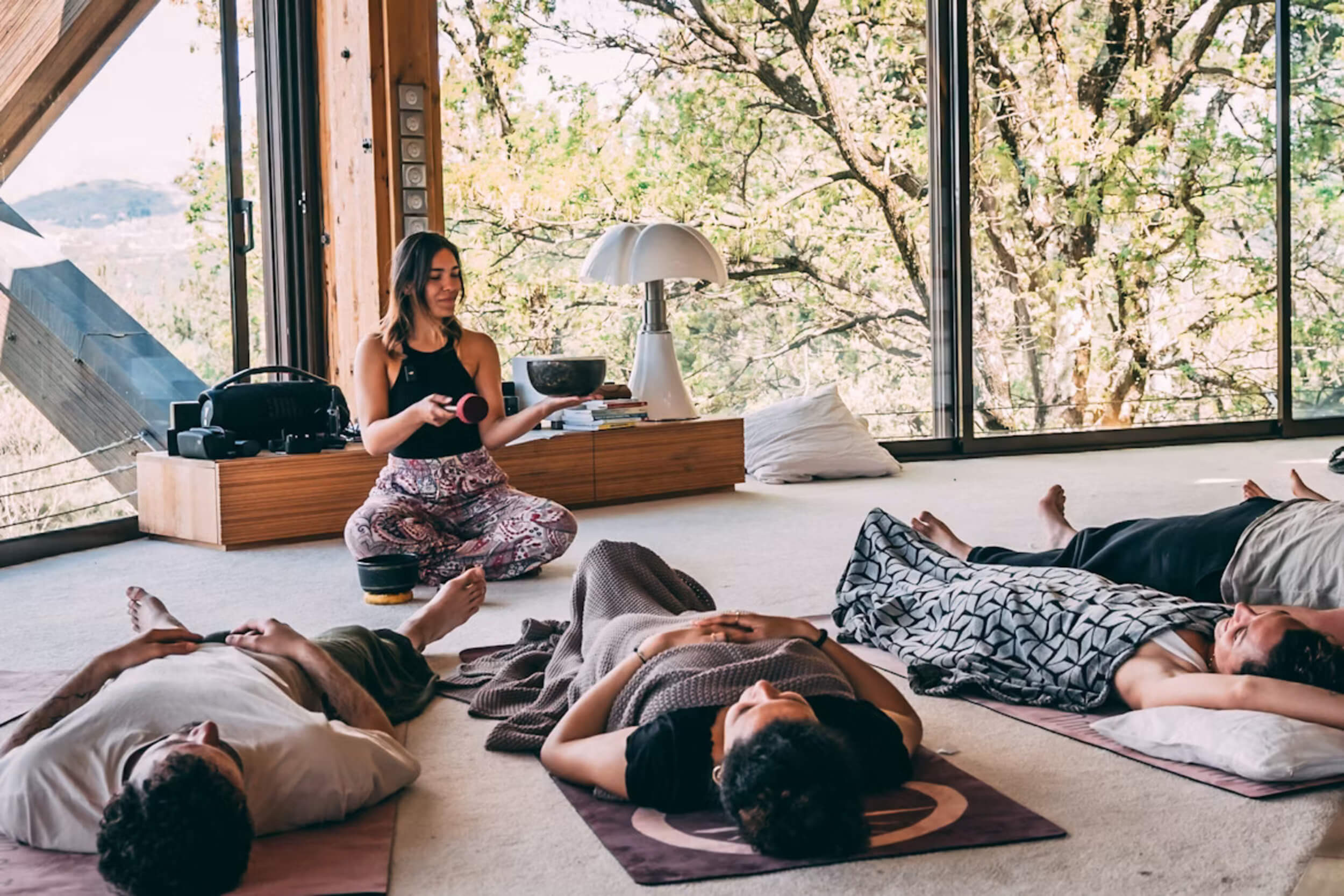
Sound practices may include humming, chanting, singing bowls, chimes, or soft instrumental music. A steady sound gives your mind a clear point of focus when silence feels uncomfortable. Humming can be especially soothing because it often creates a longer exhale and a gentle feeling of vibration.
Listen at a safe volume and choose a time when you do not need to drive, supervise children, or complete demanding work. People with tinnitus, migraines, hearing sensitivity, trauma triggers, or sensory differences should choose sounds carefully or try another practice. Claims that certain frequencies cure diseases or repair organs are not supported by reliable evidence.
Reflective writing is another useful option among energy healing techniques. Write honestly for a few minutes about:
- What feels difficult right now
- What kind of support you need
- What can remain unresolved for today
- One realistic step you can take next
End with a grounding sentence, such as, “I only need to handle the next step.” Writing should make room for honest emotions rather than forcing gratitude or positive thinking. Stop and seek support if it repeatedly causes severe distress or brings up memories that feel too difficult to manage alone.
Create a Safe and Sustainable Personal Practice
A calming practice should fit your needs, not make life feel more demanding. Choose from energy healing techniques based on what feels natural to you. You may prefer stillness, movement, sound, touch, sensory awareness, or writing.
Begin with one practice for five or ten minutes. Choose a fairly quiet time and a physically safe place where interruptions are less likely. Before you begin, notice how you feel. Check in again during and after the activity without expecting a major or immediate change.
Regular practice may make the activity feel more familiar, but it should not become another duty that causes pressure or guilt. If you feel uncomfortable, overstimulated, frustrated, or emotionally upset, shorten the session, change your surroundings, try another method, or stop.
Avoid intensive breathwork, long periods without food, extreme temperatures, unsafe positions, and anything that causes pain, dizziness, or faintness. If you are pregnant or have a medical condition, injury, disability, or sensory concern, ask an appropriate professional whether the activity is suitable.
When receiving energy healing techniques from a practitioner, look for:
- Clear explanations and realistic expectations
- Permission before any physical contact
- Honest information about prices
- Respect for your comfort and boundaries
- Support for your medical treatment and personal choices
Avoid anyone who claims to diagnose illness through energy, uses fear to sell repeated sessions, guarantees results, or tells you to stop medical care. Speak with a qualified healthcare professional when physical or emotional symptoms continue.
Conclusion
Inner calm rarely arrives through one dramatic emotional or spiritual moment. It often grows through small, repeated pauses that help you notice what is happening inside and around you.
Breathwork, grounding, body scans, Reiki, qigong, visualisation, sound, and reflective writing offer different ways to slow down and return to the present. These energy healing techniques will not feel equally helpful to everyone. Your comfort, safety, beliefs, health, and personal needs should guide what you try.
Stay open to practices that carry personal or spiritual meaning while remaining careful about claims that have not been medically proven. A calming feeling can still matter, but it does not prove that energy moved, a blockage disappeared, or an illness was treated.
Used with realistic expectations, energy healing techniques may support relaxation and self-awareness. They cannot replace qualified medical care, mental health treatment, medication, or professional advice. Sometimes, the most helpful beginning is simply one safe pause.