


There is a moment many people know too well. Someone says something sharp, dismissive, or deliberately hurtful. Your body reacts before your mind does. Your chest tightens, your thoughts race, and the urge to defend yourself rises instantly. Everything in you wants to respond, explain, correct, or push back.
We are taught that silence equals weakness, that speaking up at all costs is strength, and that not reacting means letting someone win. But this belief quietly drains us. It keeps us emotionally available to people who thrive on conflict, chaos, and control.
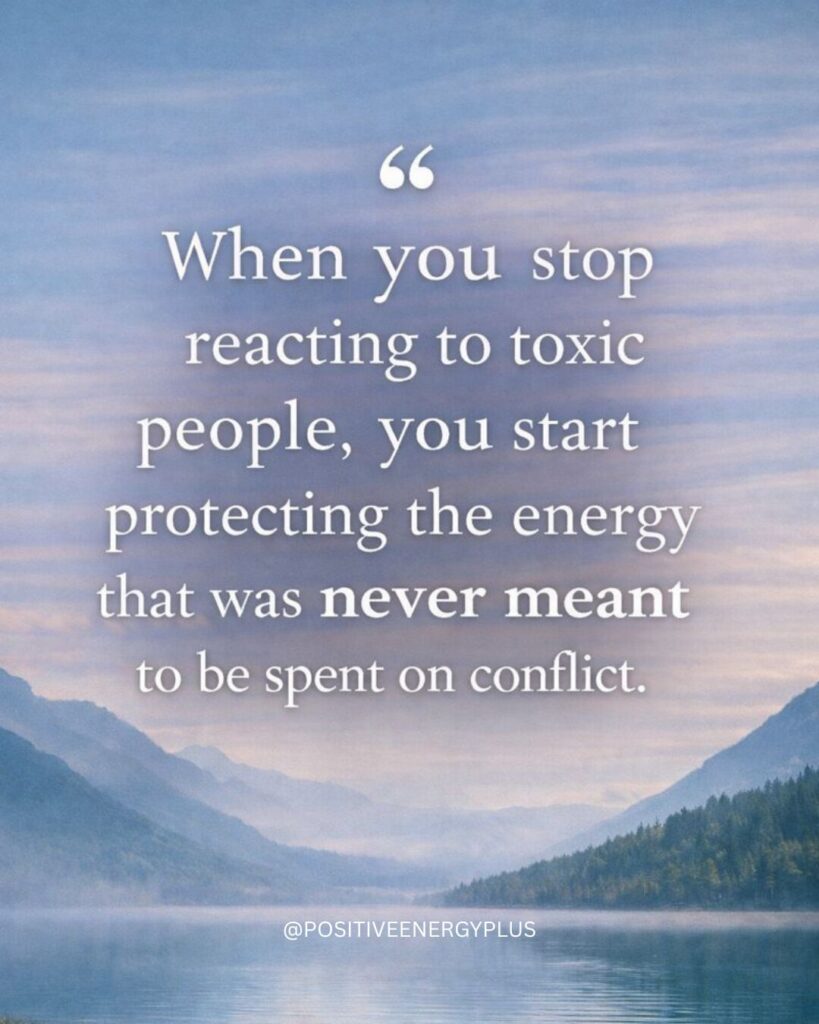
Not reacting to toxic people is not avoidance. It is a power move. It is the choice to protect your energy, your nervous system, and your sense of self.
The Difference Between Reacting and Responding
Reacting is automatic. It comes from emotion, habit, and survival instinct. When someone triggers you, your brain interprets it as a threat, even if it is only verbal. The body responds with tension, anger, or fear, and words spill out before clarity arrives.
Responding is different. Responding is conscious. It creates space between the trigger and the action. It allows you to choose whether engagement is necessary, useful, or aligned with who you want to be.
Toxic people rely on reactions. They push buttons because they know where they are. They provoke because they want access to your emotions. When you react, you give them confirmation that they still have power over you.
When you respond, or choose not to engage at all, you take that power back.
Why Toxic People Want a Reaction
Toxic behavior often comes from insecurity, control issues, or unresolved pain. This does not excuse it, but it explains the pattern. A reaction gives them validation. Anger, tears, defensiveness, and long explanations all signal that they have successfully disrupted your emotional balance.
For some people, conflict feels like connection. For others, it is a way to feel important, superior, or in control. When you react, you feed the dynamic.
Silence, calm, or disengagement interrupts it.
This is why toxic people often escalate when they stop getting a reaction. The goal was never resolution. The goal was attention.
Defending Yourself Is Not Always Self Respect
Many people stay stuck in toxic dynamics because they believe they must defend themselves every time they are misunderstood or mistreated. They think that explaining their intentions or proving their worth will eventually lead to fairness or understanding.
But with toxic people, explanations are rarely received in good faith. They are twisted, dismissed, or used later as ammunition. The more you explain, the more material you provide.
Self respect is not measured by how loudly you argue your case. Sometimes it is measured by how quickly you recognize that someone is not interested in understanding you.
Walking away from a pointless argument is not surrender. It is discernment.
The Nervous System Cost of Constant Reactivity
Every emotional reaction has a physical cost. Your body releases stress hormones, your heart rate increases, and your mind stays alert long after the interaction ends. When this happens repeatedly, especially with the same people, it becomes chronic stress.
You replay conversations in your mind, imagine better responses, and lose sleep over moments that should have passed. Your body stays tense, waiting for the next encounter.
Not reacting gives your nervous system a break. It tells your body that not every provocation is a threat that requires action. Over time, this creates emotional resilience and inner steadiness.
Peace is not passive. Peace is regulated strength.
Silence Is Not Suppression
One common fear is that not reacting means bottling emotions or ignoring harm. That is not what this practice is about. Silence does not mean pretending nothing happened. It means choosing where and how to process what happened.
You can feel your emotions without performing them for the person who caused them.
You can journal, speak with someone you trust, or reflect privately, then set boundaries later when you are calm and decide what access someone has to you moving forward.
Not reacting in the moment is about timing, not denial.
The Confidence of Emotional Selectivity
As you stop reacting to toxic behavior, something shifts internally. You realize that you do not owe everyone access to your emotions. You begin to understand that your energy is valuable and finite.
This creates a quiet confidence. You no longer feel the need to prove yourself to people who choose to misunderstand you, and you stop seeking closure from those who thrive on confusion.
You become selective. Not cold, not detached, just intentional.
This selectivity is often misread by others. Some may call it distance, arrogance, or indifference. But what it really is is self leadership.
Everyday Situations Where Not Reacting Changes Everything
At work, it might look like refusing to engage in gossip or power struggles. You do your job well, document what matters, and let consistency speak for you.
With family, it may mean not defending every life choice to someone who never listens. You change the subject, shorten visits, or stop explaining altogether.
Online, it means not responding to comments designed to provoke. You scroll past, block, or disengage, protecting your mental space.
In relationships, it might mean observing patterns instead of arguing about them. You let actions reveal truth instead of demanding explanations.
Each time you choose not to react, you strengthen trust in yourself.
Three Questions to Ask Before Responding
When you feel triggered, pause and ask yourself these questions.
Does this deserve my energy?
Will engaging improve anything?
Am I reacting from emotion or choosing from clarity?
These questions create space. They move you out of autopilot and into agency.
Often, the answer becomes obvious. Not every comment deserves engagement, not every misunderstanding needs clarity, and not every battle belongs to you.
What to Do Instead of Reacting
Pausing is powerful. Even a few deep breaths can interrupt an emotional surge. Step away from the conversation if you can.
Redirect your focus. Change the subject. Leave the room. Put your phone down.
Ground yourself physically. Feel your feet on the floor. Relax your shoulders. Slow your breathing.
If a response is necessary, keep it brief and neutral. You do not need to explain your feelings in detail. You do not need to justify your boundaries.
Clarity does not require volume.
Boundaries Without Explanations
One of the strongest skills you can develop is setting boundaries without over explaining them. Toxic people often push for reasons because they want something to argue against.
A simple statement is enough.
I am not comfortable with that.
I am not available for this conversation.
That does not work for me.
You do not need to convince anyone that your boundary is valid. It is valid because you set it.
When Not Reacting Feels Uncomfortable
At first, not reacting can feel unnatural. You may feel guilt, anxiety, or the urge to fill the silence. This is normal, especially if you were conditioned to manage other people’s emotions.
Discomfort does not mean you are doing something wrong. It often means you are breaking an old pattern.
Over time, the discomfort fades. What replaces it is relief.

Choosing Peace Is an Act of Strength
Not reacting to toxic people is not about winning or losing. It is about choosing yourself. It is about recognizing that your well being matters more than proving a point to someone who thrives on conflict.
You are not responsible for managing other people’s behavior. You are responsible for managing your own energy.
Sometimes the strongest response is no response at all.
Not because you are afraid.
Not because you do not care.
But because you care enough about yourself to walk away.