

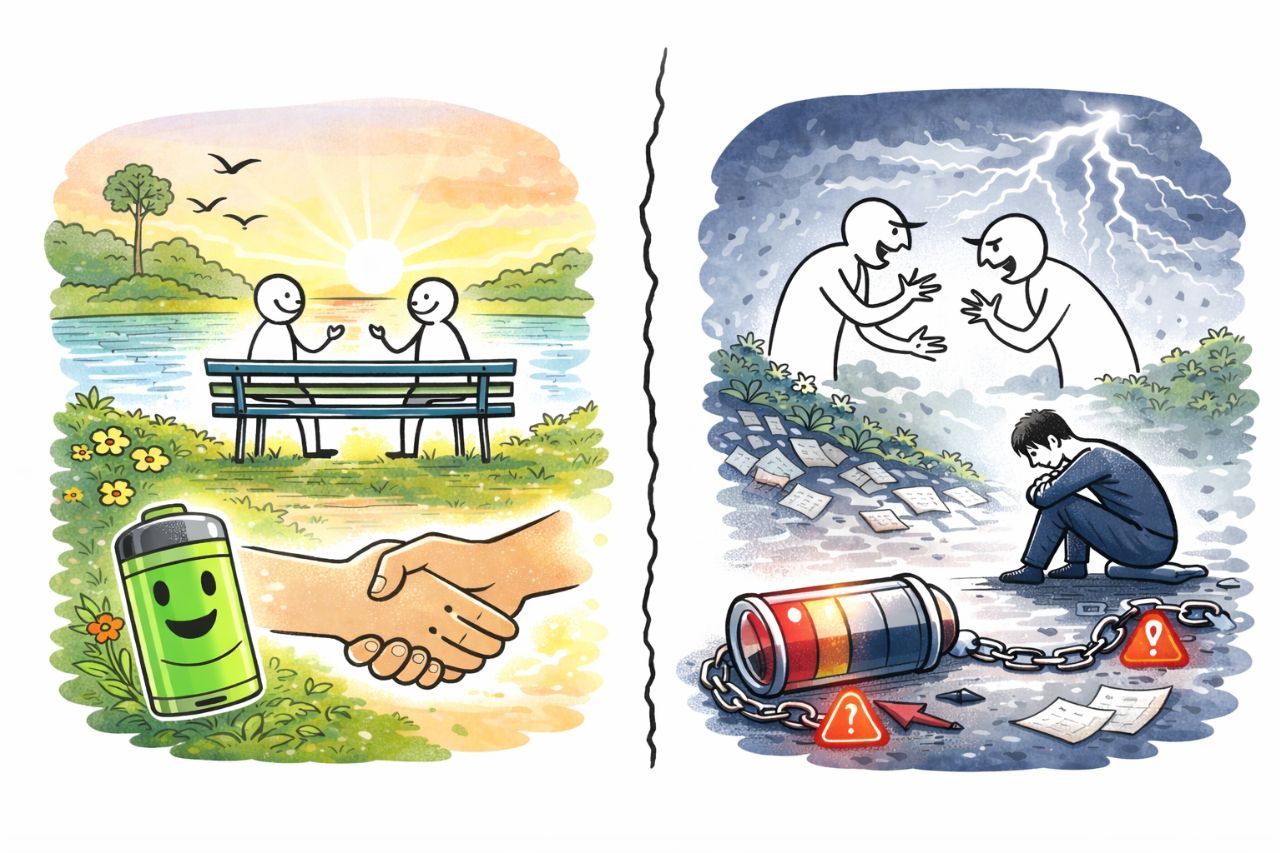
Friendships shape your confidence, your mood, and even your sense of identity. The people you spend time with can lift you higher or quietly pull you down. That is why understanding healthy vs toxic friendships matters more than many people realize.
When you learn to recognize healthy vs toxic friendships, you start protecting your emotional well being. You stop excusing harmful behavior. You begin choosing connections that support your growth instead of draining your energy.
This guide compares healthy and harmful friendship patterns in a clear and practical way. By the end, you will feel more confident spotting the difference between healthy vs toxic friendships and knowing what to do next.
Why Understanding Healthy vs Toxic Friendships Matters
Many people stay in unhealthy friendships because they feel loyal, guilty, or afraid of conflict. Others simply do not realize what is happening. Toxic patterns can grow slowly. What once felt supportive may turn controlling, competitive, or emotionally unsafe.
Healthy vs toxic friendships is not about labeling people as good or bad. It is about identifying behaviors and patterns. Every friendship has disagreements, but consistent disrespect, manipulation, or emotional harm is a warning sign.
When you understand healthy vs toxic friendships, you give yourself permission to choose peace.
1. Communication, Open and Respectful vs Dismissive and Hurtful
One of the biggest differences in healthy vs toxic friendships is communication.
In Healthy Friendships
- You can speak honestly without fear.
- Disagreements are handled calmly.
- Both people listen and try to understand.
- Apologies are sincere.
Healthy communication feels safe. You may not always agree, but you feel heard and respected.
In Toxic Friendships
- Your feelings are brushed off.
- You are mocked or criticized often.
- Arguments turn into personal attacks.
- Issues are ignored instead of resolved.
If you leave conversations feeling small, confused, or guilty for expressing yourself, that may signal a toxic pattern.
2. Support, Mutual Encouragement vs Competition and Jealousy
A clear marker in healthy vs toxic friendships is how your friend reacts to your success.
In Healthy Friendships
- They celebrate your wins.
- They encourage your goals.
- They are proud of your progress.
- They offer comfort during hard times.
Support flows both ways. You cheer for each other without keeping score.
In Toxic Friendships
- They downplay your achievements.
- They compete in unhealthy ways.
- They seem jealous or distant when you succeed.
- They only show up when things benefit them.
If your joy makes someone uncomfortable or resentful, that is not a healthy dynamic.
3. Boundaries, Respected vs Violated
Healthy vs toxic friendships often become clear when boundaries are tested.
In Healthy Friendships
- Your time is respected.
- Your privacy is honored.
- You can say no without punishment.
- Personal limits are understood.
Healthy friends understand that boundaries protect the relationship, they do not threaten it.
In Toxic Friendships
- They pressure you after you say no.
- They share private information without permission.
- They guilt you for needing space.
- They expect constant availability.
Repeated boundary violations are a serious red flag in healthy vs toxic friendships.
4. Emotional Safety, Secure vs Anxious
Emotional safety is a powerful indicator when comparing healthy vs toxic friendships.
In Healthy Friendships
- You feel calm around them.
- You can be your true self.
- You do not fear sudden mood shifts.
- You trust their intentions.
Healthy friendships feel stable. You do not constantly question where you stand.
In Toxic Friendships
- You feel anxious before meeting them.
- You walk on eggshells.
- You worry about saying the wrong thing.
- You fear being judged or excluded.
If you often feel stressed or drained after spending time together, that emotional cost matters.
5. Accountability, Owning Mistakes vs Blame Shifting
Another major difference in healthy vs toxic friendships is responsibility.
In Healthy Friendships
- Both people admit mistakes.
- Conflicts are addressed directly.
- Solutions are discussed together.
- Growth is encouraged.
Nobody is perfect. Healthy friendships allow room for learning.
In Toxic Friendships
- They never admit fault.
- They twist stories to make you the villain.
- They gaslight your memory of events.
- They avoid serious conversations.
Blame shifting erodes trust over time and is a strong sign of toxicity.
6. Effort, Balanced vs One Sided
Effort should feel mutual in healthy vs toxic friendships.
In Healthy Friendships
- Both reach out.
- Plans are initiated by both sides.
- Emotional labor is shared.
- Support is consistent.
You feel valued because both invest in the connection.
In Toxic Friendships
- You are always the one calling or texting.
- Your needs are rarely considered.
- You feel forgotten unless they need something.
- You carry most of the emotional weight.
When effort becomes consistently one sided, resentment builds.
7. Growth, Inspiring vs Limiting
The final difference in healthy vs toxic friendships is growth.
In Healthy Friendships
- You feel inspired.
- You learn from each other.
- You are encouraged to evolve.
- Change is supported.
Healthy friendships grow with you.
In Toxic Friendships
- They mock your self improvement.
- They resist your growth.
- They pressure you to stay the same.
- They feel threatened by your progress.
If someone discourages your development, they may fear losing control rather than losing connection.
Why It Can Be Hard to Walk Away
Recognizing healthy vs toxic friendships is one thing. Acting on that awareness is another.
You may feel loyal, you may remember good memories, and you may hope things will improve. Sometimes they do, especially if both people are willing to grow.
But if harmful patterns repeat without change, it is okay to protect yourself. Ending or distancing from a toxic friendship does not make you cruel. It makes you responsible for your well being.
Can Toxic Friendships Become Healthy
Sometimes, yes. The key factors include:
- Honest communication
- Willingness to change
- Mutual accountability
- Respect for boundaries
However, change requires effort from both sides. If only one person is trying, the imbalance continues.
Healthy vs toxic friendships is not about perfection. It is about consistent patterns. Occasional mistakes happen in healthy friendships. Persistent harm defines toxic ones.
How to Strengthen Healthy Friendships
If you are lucky enough to have healthy friendships, nurture them.
- Express appreciation often.
- Communicate openly.
- Respect differences.
- Show up consistently.
- Address small issues before they grow.
Strong friendships do not happen by accident. They grow through intention and care.
Questions to Ask Yourself
When evaluating healthy vs toxic friendships, reflect honestly.
- Do I feel safe being myself
- Do I feel respected
- Do I feel supported
- Do I feel drained or energized after spending time together
- Would I encourage someone I love to stay in this friendship
Your answers reveal more than excuses ever could.
Choosing Healthy Connections
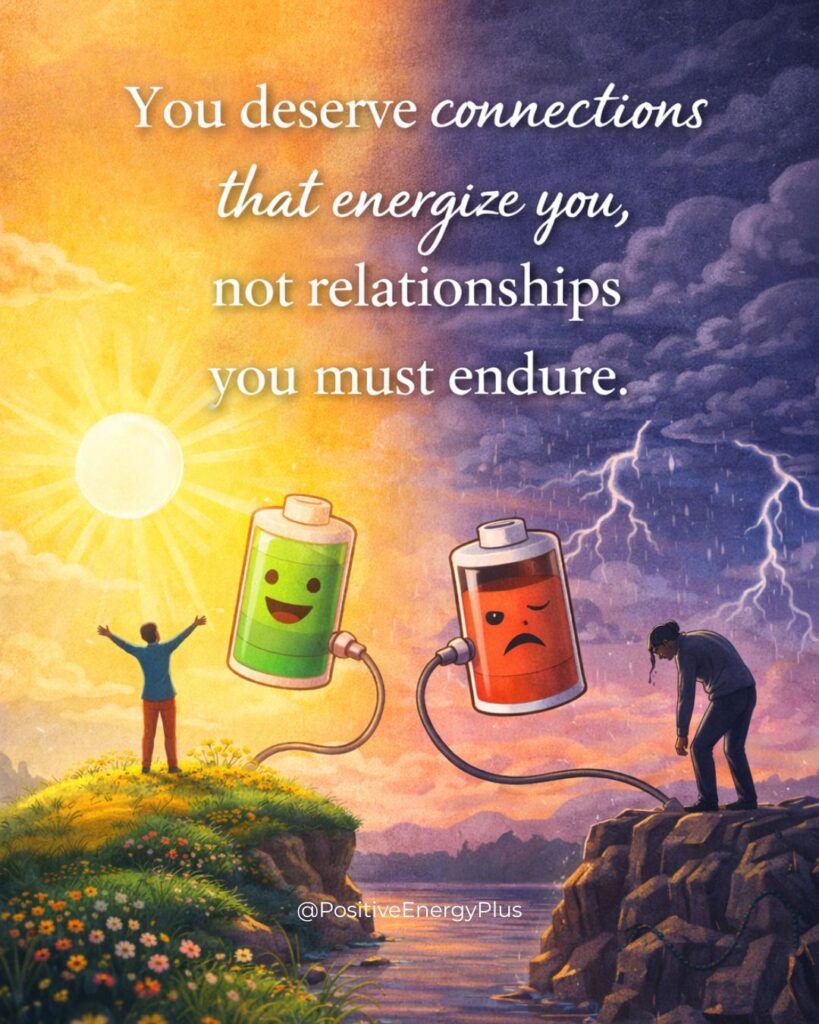
You deserve friendships that feel supportive, respectful, and safe. Understanding healthy vs toxic friendships empowers you to stop settling for less.
The more you surround yourself with people who celebrate your growth and honor your boundaries, the stronger your self worth becomes. Healthy friendships add joy, stability, and encouragement to your life. Toxic friendships often add confusion, insecurity, and stress.
When you learn to clearly identify healthy vs toxic friendships, you stop normalizing behavior that harms you. You start creating space for connections that reflect your values.
And that shift can change everything.
Final Thoughts on Healthy vs Toxic Friendships
Healthy vs toxic friendships is not about judging others. It is about recognizing patterns and choosing peace. True friends respect your boundaries, celebrate your growth, and communicate with kindness. Harmful friendships leave you doubting yourself and feeling emotionally unsafe.
Pay attention to how you feel. Your emotions are signals, not inconveniences.
You deserve friendships that feel like support, not survival.
Healthy vs Toxic Friendships, What You Need to Know Before It Drains You
How Can I Tell If I Am in Healthy vs Toxic Friendships?
First, look at consistent patterns rather than isolated moments. In healthy vs toxic friendships, the key difference is how you feel most of the time. Generally, healthy friendships feel supportive, respectful, and emotionally safe. In contrast, toxic ones often leave you anxious, drained, or doubting yourself.
Additionally, ask yourself whether your boundaries are respected and whether communication feels honest and kind. Over time, repeated disrespect, manipulation, or guilt become strong warning signs.
Can Healthy vs Toxic Friendships Change Over Time?
Yes, friendships can evolve. Sometimes, stress, life changes, or misunderstandings create temporary tension. However, if both people are willing to communicate openly, take responsibility, and adjust their behavior, a struggling friendship can gradually become healthier.
On the other hand, if harmful patterns continue without accountability, the friendship may remain toxic despite good intentions.
Is It Normal to Feel Guilty About Distancing From a Toxic Friend?
Yes, guilt is common, especially because many people value loyalty and shared history even when the relationship is unhealthy. Therefore, understanding healthy vs toxic friendships helps you realize that protecting your emotional well being is not selfish.
Although choosing distance does not erase good memories, it does acknowledge that the current dynamic is not healthy for you.
What Are Subtle Signs of Toxic Behavior in Friendships?
Toxic behavior is not always obvious. Instead, it can show up as constant sarcasm, passive aggressive comments, jealousy disguised as jokes, or repeated boundary pushing. In healthy vs toxic friendships, subtle disrespect over time can be just as damaging as major conflicts.
For this reason, pay attention to how often you feel uneasy or emotionally exhausted after interactions.
How Do I Build More Healthy Friendships in the Future?
To begin with, strengthen your self awareness. When you understand your values and boundaries, you naturally attract more aligned connections. As a result, healthy and toxic friendships become easier to recognize when you trust your instincts.
Furthermore, look for people who communicate clearly, respect limits, celebrate your growth, and show consistent effort. Ultimately, healthy friendships are built on mutual care rather than control.