


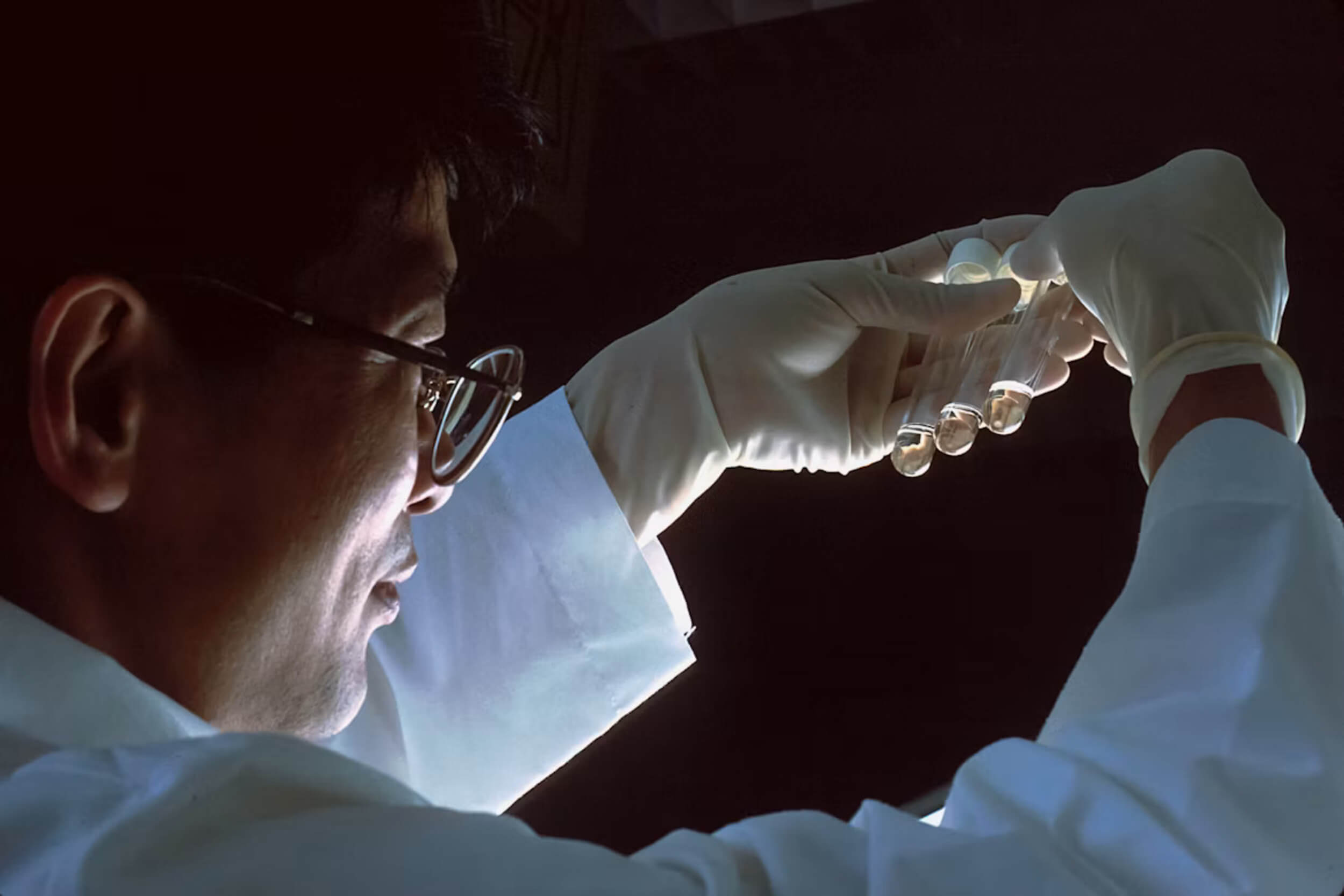

Could the next scientific breakthrough change your life sooner than you think?

Every day, scientists around the world are working on ideas that could one day become part of everyday life. Many of today’s biggest scientific breakthroughs did not happen overnight. They started with years of careful research, testing, and small discoveries that slowly led to something much bigger. In fact, many things people now take for granted, from life-saving medicines to smartphones and satellite navigation, were once considered bold scientific ideas.
Research continues to push those boundaries even further. New advances in medicine may help doctors treat diseases more effectively. Improvements in computing could solve problems much faster than today’s technology. Cleaner energy systems may reduce pollution while meeting growing energy needs, and space science continues to expand what we know about our planet and the universe beyond it. Together, these developments have the potential to improve health, communication, transportation, and environmental sustainability.
Although many of these innovations are still being developed, their progress has been remarkable. Some could help address challenges such as serious diseases, climate change, food security, and limited natural resources. The following scientific breakthroughs offer a closer look at the exciting research that could shape the future in ways that once seemed impossible.
Why Scientific Breakthroughs Matter Beyond the Laboratory
It is easy to think of research as something that only happens inside laboratories, but its effects reach far beyond those walls. Every time people use GPS to find directions, receive modern medical treatment, make a video call, or benefit from cleaner energy, they are using ideas that began with years of research. Scientific breakthroughs often become part of everyday life so gradually that people rarely stop to think about where those advances came from.
Over the years, research has helped create safer healthcare, stronger buildings and bridges, faster communication, and more reliable energy systems. It has also improved farming, transportation, and many of the technologies people rely on every day. These changes make life safer, more convenient, and more connected.
Most major advances do not happen because of one single discovery. Instead, they grow from decades of careful work, with scientists around the world building on each other’s findings. Every new study adds another piece to the puzzle, bringing new ideas closer to becoming real solutions.
The next generation of research is already making exciting progress. The following breakthroughs show how today’s work could shape the future in ways that benefit people across the world.
Emerging Discoveries Could Transform the Way People Live
Research is moving forward faster than ever, and several emerging technologies are already showing the potential to improve healthcare, energy, communication, transportation, and many other parts of everyday life. While these innovations are still developing, each one offers a glimpse of how science could help solve some of the world’s biggest challenges in the years ahead.
Artificial Intelligence Is Accelerating Scientific Discovery
Artificial intelligence, often called AI, is becoming one of the most useful tools in modern research. Instead of replacing scientists, it helps them work faster by sorting through huge amounts of information that would take people much longer to study. This allows researchers to spend more time understanding results and testing new ideas. As a result, scientific breakthroughs are happening more quickly in many different fields.
AI is already helping researchers:
- Search for promising new medicines
- Improve weather and climate forecasting
- Design stronger and lighter materials
- Study diseases and support medical research
These systems can identify patterns that are difficult for people to spot on their own. Researchers still make the important decisions, verify results, and guide every stage of the work. AI simply provides another powerful tool that speeds up the process. As technology continues to improve, AI is expected to support even more discoveries that can improve healthcare, protect the environment, and solve complex scientific problems.
Gene Editing May Improve the Treatment of Genetic Diseases
Every cell in the human body contains genes that help determine how the body grows and functions. Modern gene-editing technology allows scientists to study these genes more closely and, in some cases, carefully change specific parts of them. This growing area of research has already led to important scientific breakthroughs and continues to expand our understanding of many inherited conditions.
Researchers hope gene editing can help treat diseases caused by faulty genes while supporting more personalized medical care. It also gives scientists a better way to understand how certain illnesses develop, making it easier to create more effective treatments in the future.
Although the progress has been encouraging, gene editing is still carefully studied before it becomes widely available. Researchers continue to focus on safety, long-term results, and responsible use. Careful testing and strict guidelines help ensure that new treatments are both effective and safe for patients, allowing this promising technology to continue moving forward with confidence.
Fusion Energy Could Provide Cleaner Long-Term Power
Fusion energy has been called one of the biggest goals in modern energy research. Unlike traditional nuclear power, which produces energy by splitting heavy atoms, fusion creates energy by joining light atoms together. This is the same process that powers the sun. If scientists can make fusion work reliably on Earth, it could become one of the most important scientific breakthroughs of the century.
Fusion has several possible advantages. It could produce large amounts of electricity while creating very little long-term radioactive waste compared with today’s nuclear power plants. It also does not release carbon emissions during electricity generation, making it a promising option for cleaner energy.
Researchers have made important progress in recent years, including successful fusion experiments that produced encouraging results. However, major engineering challenges still remain. Scientists are working to keep fusion reactions stable and develop systems that can produce electricity efficiently on a large scale. Although there is still work ahead, progress continues to move forward.

Quantum Computing Could Solve Problems Beyond Today’s Computers
Traditional computers process information using bits that represent either a 0 or a 1. Quantum computers work differently by using quantum bits, or qubits, which can process information in more complex ways. This allows them to tackle certain calculations much faster than today’s most powerful computers. As research advances, these scientific breakthroughs could help solve problems that are currently too difficult or time-consuming.
Scientists believe quantum computing could support many important fields, including:
- Developing new medicines
- Improving climate and weather models
- Strengthening financial systems
- Optimizing transportation and supply chains
- Running advanced scientific simulations
Quantum computers are not expected to replace everyday computers. Instead, they will likely handle highly specialized tasks that require enormous computing power. While the technology is still developing, researchers continue to improve stability, accuracy, and reliability, bringing practical applications closer to reality.
Advanced Robotics Are Expanding Human Capabilities
Robots are becoming more capable of helping people perform difficult, repetitive, or dangerous work. They are already used in factories, hospitals, farms, disaster response, and other environments where safety and precision are important. These growing scientific breakthroughs are allowing robots to support workers instead of simply performing repetitive tasks.
Modern robots use advanced sensors, cameras, and artificial intelligence to better understand their surroundings. This allows them to adjust to changing situations, move more accurately, and work safely alongside people. In healthcare, robotic systems can assist surgeons during delicate procedures. In agriculture, they help monitor crops and improve harvesting. During emergencies, robots can enter hazardous areas that may be unsafe for rescue teams.
As robotics technology continues to improve, it can increase productivity while reducing physical risks for workers. Rather than replacing human skills, many robotic systems are designed to handle demanding tasks so people can focus on work that requires judgment, creativity, and decision-making.
Space Exploration Is Opening New Scientific Opportunities
Space research continues to answer important questions about Earth, our solar system, and the universe beyond it. New spacecraft, satellites, powerful telescopes, and missions to the Moon and other destinations allow scientists to collect information that was once impossible to obtain. These scientific breakthroughs continue expanding scientific knowledge while creating technologies that benefit life on Earth.
Satellites help monitor weather, track climate changes, improve communications, and support navigation systems that millions of people use every day. Space missions also allow scientists to study planets, asteroids, and distant galaxies while learning more about how our own planet formed and continues to change.
Many technologies first developed for space later become useful in everyday life. Improvements in medical equipment, communication systems, water purification, and advanced materials all have roots in space research. As future missions continue, they are expected to provide even more knowledge and practical innovations for people around the world.
Lab-Grown Organs and Bioprinting Could Transform Healthcare
Scientists are developing new ways to repair or replace damaged tissues using tissue engineering and 3D bioprinting. Instead of printing plastic or metal objects, specialized bioprinters use living cells to create tissues that closely resemble those found in the human body. These promising scientific breakthroughs could greatly improve future healthcare.
Researchers hope these technologies will eventually help create replacement tissues and, one day, complete organs for patients waiting for transplants. They are also using lab-grown tissues to test new medicines, allowing researchers to better understand how treatments may work before human clinical trials begin.
Although widespread medical use is still under development, steady progress continues each year. Scientists remain focused on improving safety, reliability, and long-term success before these treatments become more widely available. If research continues at its current pace, regenerative medicine may provide new options for patients facing conditions that are difficult to treat today.
Responsible Innovation Will Shape How These Technologies Develop
Scientific progress brings exciting opportunities, but every new technology must be developed responsibly. Before new treatments, devices, or systems become widely available, they go through years of testing to confirm they are safe, effective, and reliable. Responsible research helps build public trust while ensuring that scientific breakthroughs improve lives without creating unnecessary risks.
Several important factors guide responsible innovation:
- Careful safety testing before public use
- Ethical oversight throughout research
- Protection of privacy and personal information
- Environmental responsibility
- Fair access to new technologies
No single group can achieve these goals alone. Researchers work closely with healthcare professionals, engineers, businesses, governments, universities, and international organizations to develop clear standards and share knowledge. This cooperation helps identify potential concerns early while encouraging continued innovation.
As science moves forward, balancing progress with responsibility will remain essential. Careful planning and strong ethical standards help ensure that future technologies deliver lasting benefits while protecting both people and the environment for generations to come.
Conclusion
The pace of scientific progress continues to surprise and inspire. Advances in artificial intelligence, gene editing, fusion energy, quantum computing, robotics, space exploration, and regenerative medicine show how years of careful research can lead to ideas that have the power to improve everyday life. While each technology focuses on different challenges, they all share the same goal of helping people live healthier, safer, and more sustainable lives. These scientific breakthroughs also remind us that meaningful progress often comes from steady research rather than sudden discoveries.
Many of today’s experimental technologies could eventually become as common as smartphones, GPS, or modern medical treatments. History has shown that ideas once viewed as ambitious can become essential tools that people use without giving them a second thought.
Staying informed about scientific research helps us better understand how innovation is shaping the future. As scientists continue building on today’s knowledge, new solutions may improve healthcare, protect the environment, strengthen communities, and make everyday life more efficient.
Although no one can predict exactly what comes next, one thing is clear. Continued research, responsible innovation, and global collaboration will help create a healthier, safer, and more innovative future for generations to come.